
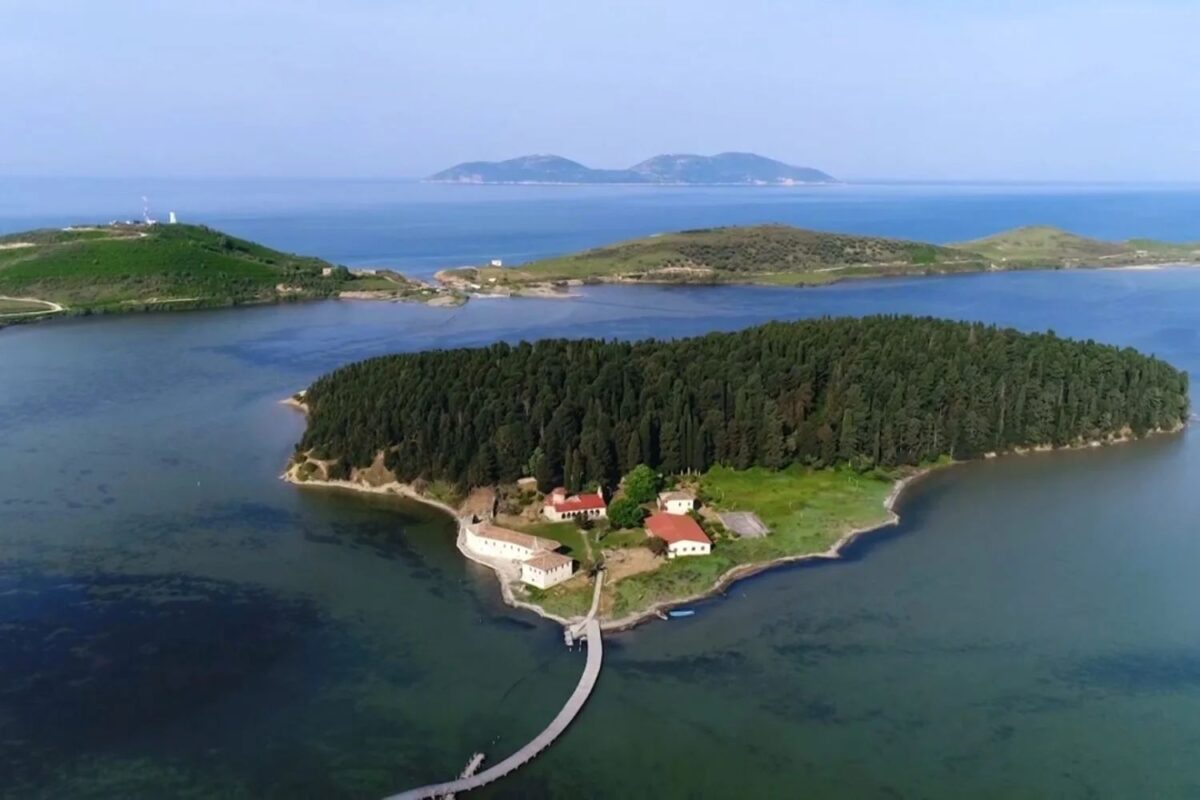
The Monastery of Saint Mary of Zvërnec stands as one of Albania’s most remarkable Byzantine monuments, located on a small, serene island within the Narta Lagoon near Vlora. Surrounded by water, pine forests, and silence, it represents a unique blend of spiritual devotion, historical depth, and natural beauty.
Origins and Historical Context
The foundation of the monastery likely dates between the 11th and 14th centuries, a period when the present-day village of Zvërnec did not yet exist. At that time, both the island and the surrounding mainland were under the ecclesiastical jurisdiction of the nearby village of Nartë. Only in later centuries did the settlement of Zvërnec develop along the lagoon’s shore, eventually giving the monastery its modern name through geographic association.
Although the monastery’s origins are medieval, much of the visible complex today is believed to date from later reconstructions, particularly during the 19th century. Recognizing its cultural and historical importance, the site has been protected as a Cultural Monument since 1963.
Architectural Significance
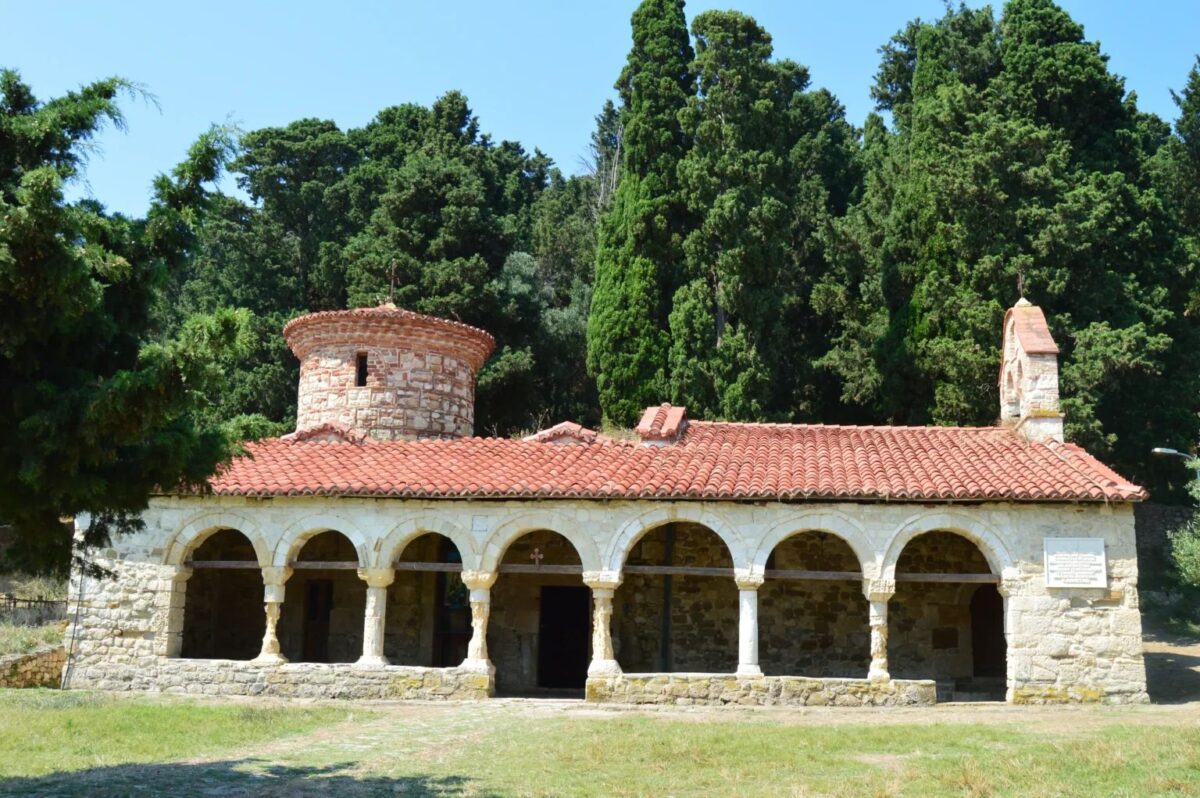
The monastery church is a notable example of Byzantine architecture, built in the “free cross” plan with a central dome. According to scholar Aleksandër Meksi, the structure reflects two main construction phases.
The older section includes the nave and the narthex. The nave is designed in the shape of a free cross and contains key liturgical elements such as the apse, prothesis, and diaconicon. Its dome, constructed with alternating layers of stone and brick, demonstrates the refined techniques of medieval builders. The narthex serves as a transitional space, modest yet harmoniously integrated.
Later additions include the exonarthex and the bell tower, which introduce stylistic influences reminiscent of Roman architecture. The exonarthex is particularly striking, featuring a façade with seven arches supported by six columns, creating a balanced fusion of Byzantine and Western elements.
Scholars differ on the precise dating of the structure. While Meksi places it in the 13th–14th centuries, Austrian researchers Helmut and Herta Buschhausen suggest an earlier origin in the 10th century. Adding to its historical intrigue, researcher Theofan Popa proposed that a tombstone inside the church may belong to the Byzantine nobleman Argiros Karanxha.
Monastic Life and Spiritual Role
For centuries, the monastery served as a retreat for Orthodox monks seeking isolation and spiritual discipline. Life here was governed by strict religious rules centered on prayer, obedience, and communal living. The monks devoted themselves not only to worship but also to writing, craftsmanship, and contemplation.
Its secluded island location made it ideal for such a lifestyle, echoing early Christian monastic traditions established in places like Egypt during the 4th century.
Legends and Historical Narratives
The monastery is deeply intertwined with local legends and historical anecdotes. One story, recorded by Eqrem Bey Vlora, recounts events from the Norman campaigns of 1081.
According to the tale, the wife of a Byzantine commander betrayed her husband to assist the Norman knight Bohemond of Tarentum. However, after the arrival of Robert Guiscard, she was captured and confined within the Zvërnec Monastery.
Another significant figure connected to the site is Marigo Posio, known for embroidering Albania’s independence flag. She was buried in the monastery’s cemetery in 1932. Although her grave was lost during the atheist period of the communist regime, it was rediscovered in the 1980s and has since become a place of remembrance.
Visiting the Monastery
Reaching the monastery is part of its charm. Located about 20 kilometers from Vlora, visitors travel through the scenic Narta area before crossing a long wooden bridge that connects the mainland to the island. This walkway, surrounded by calm waters and lush vegetation, offers a peaceful and visually striking approach.
Today, the monastery is not only a religious site but also a major cultural and tourist attraction. Its quiet atmosphere, combined with the beauty of the lagoon and the surrounding ecosystem, makes it a destination for history enthusiasts, pilgrims, and nature lovers alike.
Cultural Importance Today
The Monastery of Zvërnec continues to attract visitors from around the world, drawn by its tranquil setting and rich heritage. Promoted by cultural institutions, it stands as a symbol of Albania’s Byzantine past and its enduring spiritual traditions.
Visitors often describe it as a place where time seems to stand still—where history, faith, and nature exist in harmony.
Conclusion
The Monastery of Saint Mary of Zvërnec is more than an architectural monument; it is a living testament to Albania’s historical and cultural identity. From its medieval origins and architectural beauty to its legends and continued relevance, the monastery remains one of the most captivating sites in the Vlora region, offering a rare glimpse into a world shaped by devotion, history, and natural serenity.